
Prague built its tourism reputation partly on being one of Europe's cheapest capital cities, and while prices have climbed since the Czech Republic joined the EU, it's still genuinely possible to visit well without spending heavily. If you know where the tourist markup actually lives.
Where the Money Actually Goes
Old Town Square and the Charles Bridge are stunning and also where restaurant prices triple compared to two streets away. Any restaurant with a photo menu and a host actively inviting you in from the street is priced for tourists who won't come back. A reliable rule across most of Europe, but especially true here. Walk five minutes into any surrounding side street and prices drop significantly for equal or better food.
Free and Nearly Free Things Worth Doing
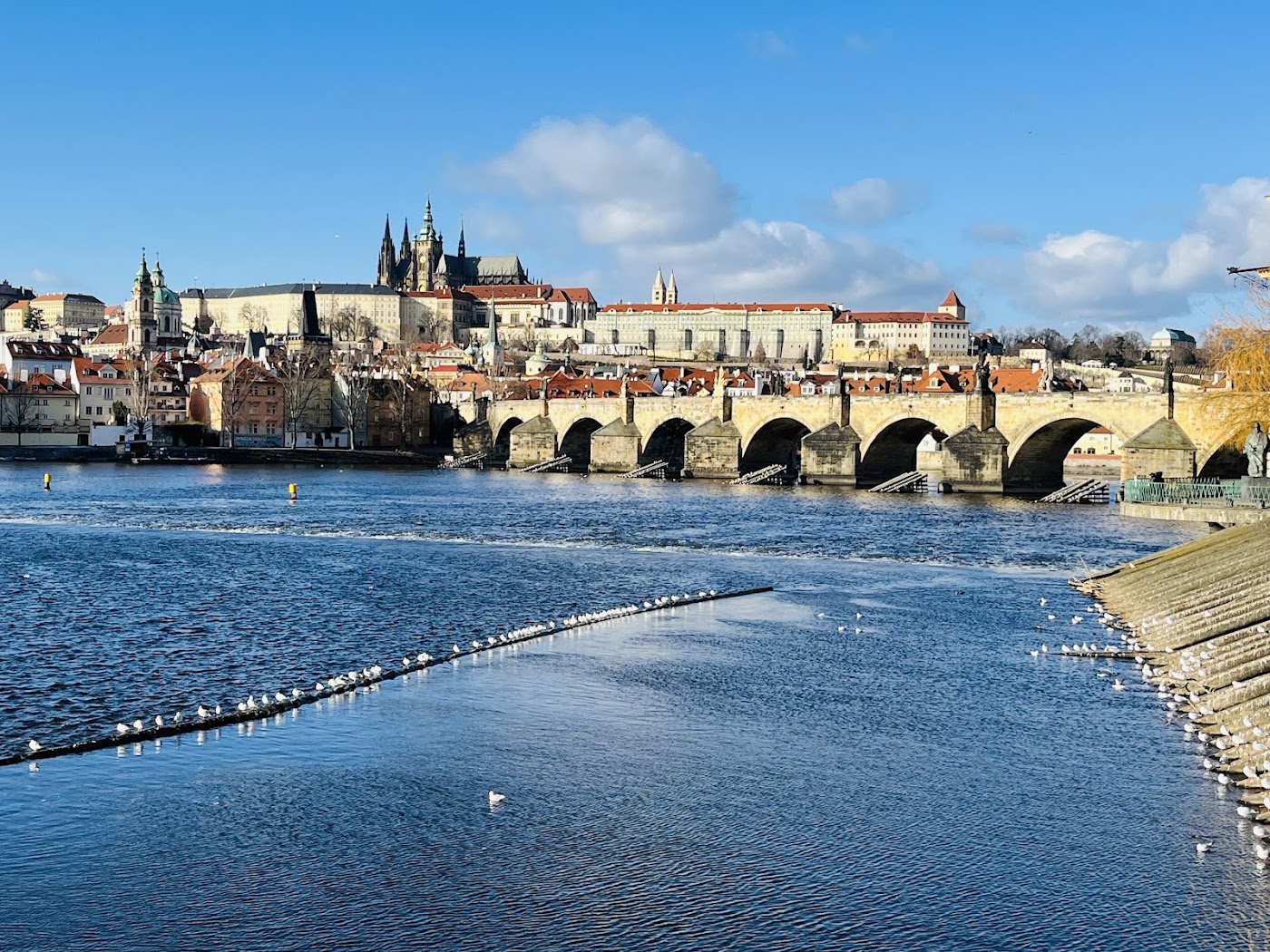
Walking across the Charles Bridge costs nothing and is worth doing at both sunrise and sunset. The light and crowd levels change completely. Petřín Hill, reachable by a short funicular ride for the price of a standard public transport ticket, gives one of the best views over the city and includes a smaller replica of the Eiffel Tower most visitors don't expect. Prague Castle's outer grounds and courtyards are free to enter; only specific interiors (St. Vitus Cathedral's main nave, the Old Royal Palace) require a paid ticket.
Letná Park, across the river from the Old Town, offers a quieter, more local vantage point over the city and is where residents actually go to relax rather than photograph landmarks.
Food and Drink on a Budget
Czech beer is, by most measures, some of the best and cheapest in Europe, and ordering it is rarely the expensive part of any meal. Even in central tourist areas, a beer often costs less than bottled water. Traditional Czech food (goulash, svíčková, roast pork with dumplings and cabbage) is heavy, filling, and inexpensive at any restaurant that isn't specifically targeting tour groups. Look for places with Czech-language menus alongside the English translation. A decent sign that locals eat there too.
Trdelník, the sweet spiral pastry sold from stalls throughout the Old Town, is popular with tourists but not actually a traditional Czech food. It's worth trying once, but it's not the local specialty the stalls' marketing implies.
Getting Around
Prague's public transport, trams, metro, and buses on one integrated ticket system, is inexpensive and covers the city thoroughly. A 24-hour or 72-hour pass is worth buying if you're moving around a lot; the historic center itself is compact enough to walk between most major sights.
Practical Notes
- Currency: The Czech Republic uses the koruna (CZK), not the euro. Some tourist-area businesses quote prices in euros, but you'll almost always get a better rate paying in koruna.
- Best months: May, June, and September avoid both the harshest winter cold and the peak summer crowds around Charles Bridge and Old Town Square.
- Tipping: Rounding up the bill or adding roughly 10% is standard and appreciated, not strictly required.
- Day trips: Kutná Hora, home to the famous bone-decorated Sedlec Ossuary, is about an hour by train and among the most popular half-day trips from the city.